Doctirs That Work for Tv Shows for Continuity
Doctor Who continuity has always been confusing - and that's by design, not by accident.Doctor Who season 12 proved remarkably controversial, with showrunner Chris Chibnall rewriting the show's history. He revealed the Doctor is not just a Time Lord but she's the Timeless Child, a being who possibly originated from another universe, and who became the base genetic code for all Gallifreyans within the Citadel. The fanbase is currently divided on the issue, with some wishing it could be retconned away and others willing to wait and see.
In reality,Doctor Who continuity has always been something of a mess. The Time Lords themselves were a clumsy retcon in the first place, introduced in 1969's "The War Games," and contradicting the pilot episode.Doctor Who's lore is full of these contradictions, ranging from competing origins for the Daleks - and destruction of their homeworld, Skaro - to three separate tales explaining the sinking of Atlantis.
So how didDoctor Who's continuity become such a mess? The problem is deeply rooted in Doctor Who's origins with the BBC, but it can really be traced back to the fandom - because it's not necessarily an issue with the franchise as a whole.
The BBC Has Never Established A Rule Of Canon For Doctor Who
Most long-running franchises have a clear sense of canon, an established rule set by some authority that allows fans to know what is and is not considered part of the universe. InStar Trek, for example, it's mostly restricted to the films and TV shows; only recently haveStar Trek tie-in books been explicitly considered canon, largely because key members of various production teams got involved with them. InStar Wars, the Disney acquisition in 2012 afforded Lucasfilm an opportunity to wipe the slate clean, and now every piece ofStar Wars content is considered equal in terms of canonicity. That canon is overseen by the Lucasfilm Story Group, who attempt to ensure it remains consistent.
ButDoctor Who has never had a sense of canon. This isn't an accident; it's a deliberate decision on the BBC's part, because the broadcaster has studiously avoided limiting the show's narrative potential by imposing a rule of what is or is not canon. "It is impossible for a show about a dimension-hopping time traveler to have a canon," then-writer - and future showrunner - Steven Moffat remarked at San Diego Comic-Con 2008. He was making a simple point;Doctor Who is fluid, with its stars jumping from one time period to another, from one world to another. Each story has the potential to build a whole new world, one that should be appreciated as a distinct entity rather than slotted into the franchise's history like another piece of a jigsaw puzzle. AsDoctor Who author Paul Cornell explained in an entry on his personal blog:
"Not giving a toss about how it all fits together is one ofDoctor Who's oldest, proudest traditions, a strength of the series. (And a No Prize to the person who points out the first ever continuity error in the original series.) It's allowed infinite change, and never left the show crunched into a corner after all the dramatic options had already been done. Terrible continuity equals infinitely flexible format. It's indefinability that results in that old 'indefinable magic'. Much in the same way that there's no one definition of what a 'Doctor Who companion' is that includes all of them, and so a new one can be whatever works."
Canon & Continuity Are Fan Concepts In Doctor Who
Naturally, that's not enough for the fans, who have been attempting to make sense ofDoctor Who lore since the 1970s. These first attempts manifested in basic episode guides, helping people to understand the stories that had gone before; rarely were tie-in mediums such as comic strips considered. Oddly enough, for the fans the cancellation ofDoctor Who in 1989 presented an opportunity to regroup and figure the canon out. Jean-Marc Lofficier was the most notable contributor at this stage, writing aTerrestrial Index that outlined the complete history of Earth and aUniversal Databank that served as an encyclopedia of all thingsDoctor Who. When the series relaunched in 2005, it invited a whole new generation of fans to start trying to wrestle the once-again-growing continuity into some semblance of order. The most notable work to date is Lance Parkin and Lars Pearson'sAHistory, which advertises itself as an "Unauthorized History of the Doctor Who Universe." The Fourth Edition was published in 2018, and it's badly in need of an update.
But in order to truly establish a rule of canon, you first need to decide what is part of it. This is the subject of heated debate among the fans, because to declare something "not canon" is essentially to say it does not matter, and no fan has the authority to make that distinction. What's more, it's not at all easy to work out where the line should be drawn. Are the Big Finish audio dramas canon? Some of them have been explicitly referenced; others contradict the TV series. Or what about Virgin's "New Adventures" novels, published in the '90s and originally marketed as the ongoing story ofDoctor Who at a time when a TV revival seemed impossible? These seem even more distant from the established lore, especially after the Timeless Child retcon. But showrunners have consistently refused to dismiss these, with Moffat simply calling them "a separate (and equally valid) continuity" in a Q&A published inDoctor Who Magazine #482.
Doctor Who Continuity Is A Tale Of Conflicting Narratives
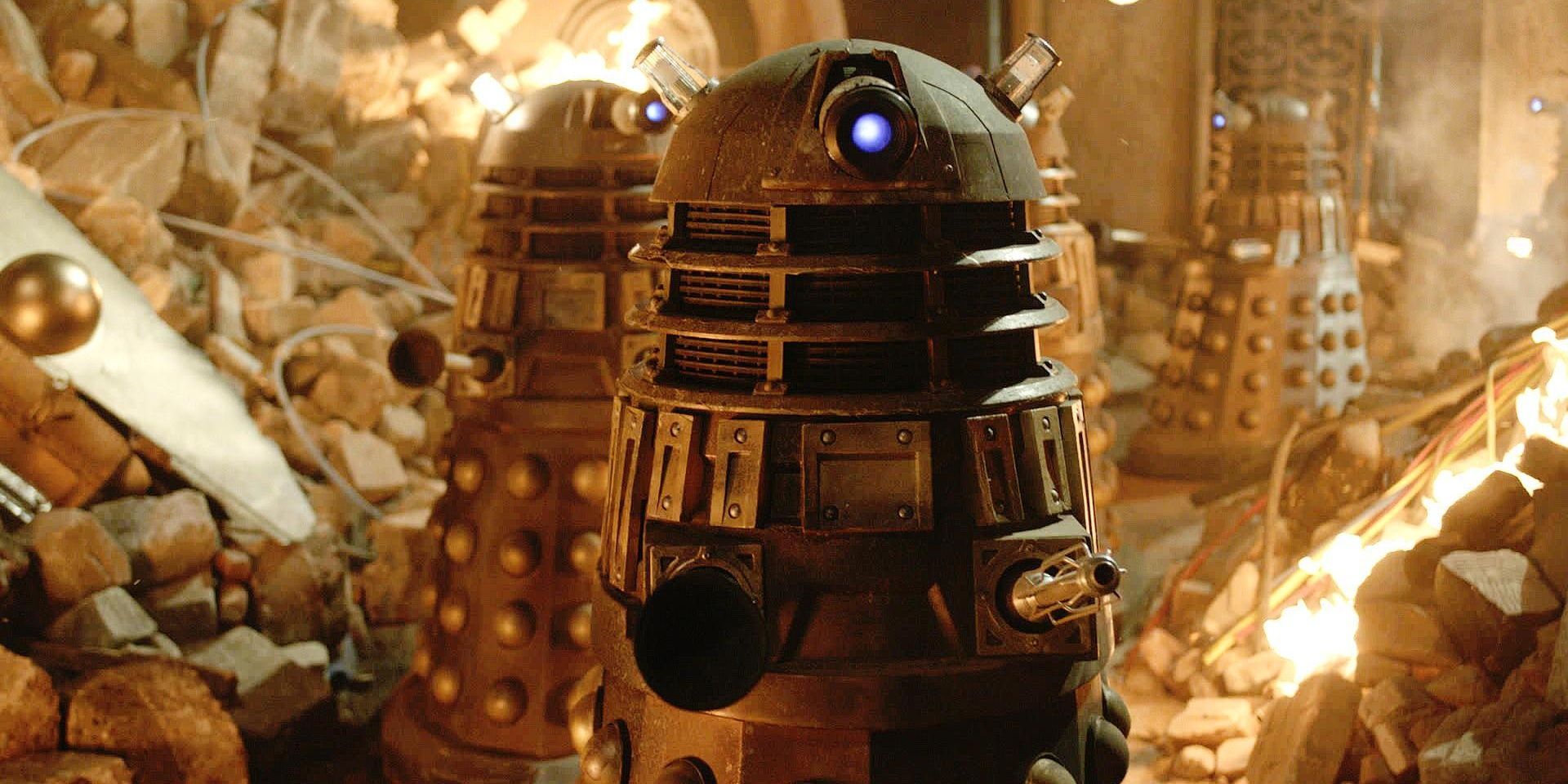
Moffat's comment is probably the most useful statement on continuity to date, because it suggests any attempt to decide Doctor Who canon is doomed to fail. There is not just the one continuity; there are numerous contradictory, conflicting narratives. Thus there are two accounts of the origin of the Daleks, conflicting with one another in their finer details; Atlantis has been destroyed three times; the Doctor is a Time Lord, an ancient being referred to as the Other, and the Timeless Child, all at once. There is no way to reconcile these narratives, and attempts to do so are simply an exercise of logic rather than binding upon the show.
It all sounds crazy, especially to fans who are more comfortable with the fixed continuity of franchises such asStar Trek orStar Wars, where canon really does matter. But when Russell T. Davies relaunchedDoctor Who in 2005, he essentially gave the show a "Get Out Of Jail Free Card" with regard to canon. He revealed the Time Lords and the Daleks had been engaged in a Time War, a conflict that broke the laws of time and space. History itself was torn apart and patched back together again, a billion timelines were created and instantly destroyed. An event like the Time War neatly explains why continuity is so inconsistent inDoctor Who, because the Doctor's life was essentially Ground Zero for the conflict. He was there when the Time War began, in "Genesis of the Daleks," and he was the one who brought it to an end in "The Day of the Doctor." This explains all the conflicting narratives; they are evidence of competing timelines that overlap with one another, of the damage caused by the Time War. It's a simple solution, and it means no writer or showrunner needs to worry too much about canon. They simply need to focus on telling the best Doctor Who story they can.
Source: https://screenrant.com/doctor-who-continuity-canon-confusing-broken-explained/
0 Response to "Doctirs That Work for Tv Shows for Continuity"
Post a Comment